This is the story of how I learned that self-care isn’t selfish—it’s stewardship, and it makes me a healthier mother.
Learning Motherhood from My Mother
I grew up in a single-parent home where I saw my mother as superwoman. She was responsible for our physical, mental, spiritual, emotional, and academic care and development—and I never saw her take a break. My siblings and I weren’t dropped off at a neighbor’s or relative’s house so she could get away. When money was low, she didn’t complain; instead, she used that reality as a teaching point for us to attend college and avoid teenage pregnancy.
I remember her utter exhaustion as I tried to tell her about my day at school while she could barely keep her eyes open. I recall her saying once, “Tonya, I’m tired.” She took naps after work daily. She gave up her bed and slept on the couch. She bought us outfits for Easter and Christmas while she wore something old. The only thing I remember her asking for was a clean house when she got off work.
Because of my mother’s example, I knew motherhood was an enormous responsibility—and I still welcomed it. I played house, mothering eleven dolls and stuffed animals. I also knew I did not want to be a single parent; the financial responsibility alone felt too heavy. I planned to marry a godly man and become a homemaker so I could be fully present in my children’s lives. I admired the stay-at-home moms who came up to the school to deliver cookies for their child’s birthday. In my mind, those mothers never got tired of hearing about their child’s day because the demands of a 9-to-5 job didn’t drain them.
Running on Fumes
In 2012, when I became a mother to three girls, I immediately kicked into superwoman mode. Even though I was married and my husband actively co-parented in all the right ways, I was exhausted. Yes, I was parenting children who had experienced trauma while working as a high school teacher, but the bigger issue was that I wasn’t taking care of myself. I never put my needs above my children’s.
Content note: The next section includes references to burnout, mental health strain, and conversations about returning foster/adopted children to the system.
I remember when the girls’ therapist came to the house. I was about to call the girls into the room, but she stopped me and said, “Mrs. Barnes, I’m here for you today. You are doing a lot, and this situation is not good for you. I recommend that you give the girls back to the system and take care of yourself.”
Around that same time, my mother-in-law said, “Tonya, you have done well and given your all. I did not know that raising these kids would involve this type of care; it’s not worth you losing your mind. It’s okay to give the girls back.”
I cried. I prayed. I kept going—operating on fumes until fumes became my norm.
In 2019, another therapist said, “Mrs. Barnes, I am concerned about you. You have done so much for the children, but you need help for yourself.” At that point, I had a flood of emotions I was afraid to unleash in therapy. I asked her to continue supporting the girls because I planned to take care of myself once they became adults.
Looking back, I was modeling what I saw my mother do.
When Self-Care Became Necessary
In 2021, two of the girls were in their late teens, and the oldest child was in her early twenties. This phase of motherhood was coming to a close, and I could finally take care of myself.
Just when I thought relief was approaching, motherhood asked something new of me.
Much to my surprise, I became pregnant. This high-risk pregnancy demanded something I had never practiced as a mother: self-care.
So I had to ask myself a new question: What does it look like to put your needs above everyone else’s?
I learned to stop being available by default. At work, I stopped eating lunch with co-workers and tutoring students during my lunch period. That time became my reset: listening to music, praying, and recharging mentally.
I also stopped engaging in conversations in spaces where I was not valued. That was difficult because I am passionate about education, but I learned to redirect that passion by enrolling in classes at a local university.
At home, I removed myself from teenagers who sought to attack me because they were inwardly miserable. I provided their needs, but I no longer made myself available for their wants.
I made time to do simple things like color, scrapbook, and read. My husband and I met for lunch dates that refueled me emotionally.
For unhealthy relationships with family members, I unfriended them on social media and allowed my husband to screen my calls. I slept. I stopped pushing myself to be everything for everyone. I was intentionally there for myself.
Learning to Mother Myself
Then I unexpectedly went into labor at thirty-three weeks and became a NICU mother. At first, I was forced into self-care because the medications prevented me from being with my baby regularly. But as the medications wore off, I felt the old supermom mode creeping back in.
I was planning an eighteenth birthday and going-away party for adopted child number two, planning an “I’m sorry your world is falling apart” Christmas for my sixteen-year-old, trying to complete grades and lesson plans while helping a struggling substitute teacher, and speaking with specialists about my preterm baby.
That’s when I saw the fumes again.
It didn’t take long to realize I did not want to go back down that road, so I made changes. I called my job and reminded them that I was on maternity leave and would not be available to help the substitute do her job. I stopped being emotionally available for my teenagers to dump their frustrations on me by limiting conversations. I stayed in the nursery with the door shut. I slept.
Practicing self-care was beginning to feel normal and necessary.
It has now been three years of practicing self-care as a mother. When I am low on fuel, I stop. I do things that refuel me physically, mentally, and spiritually. I no longer allow the opinions of others about my parenting decisions to become the final voice in my life.
I’ve learned there are many ways to parent lovingly—and I do not have to give everything I have to my children to be a great parent.
I learned to mother myself.
I buy myself flowers and gifts. I look in the mirror and say, “I love you.” I tell myself that I am doing a good job.
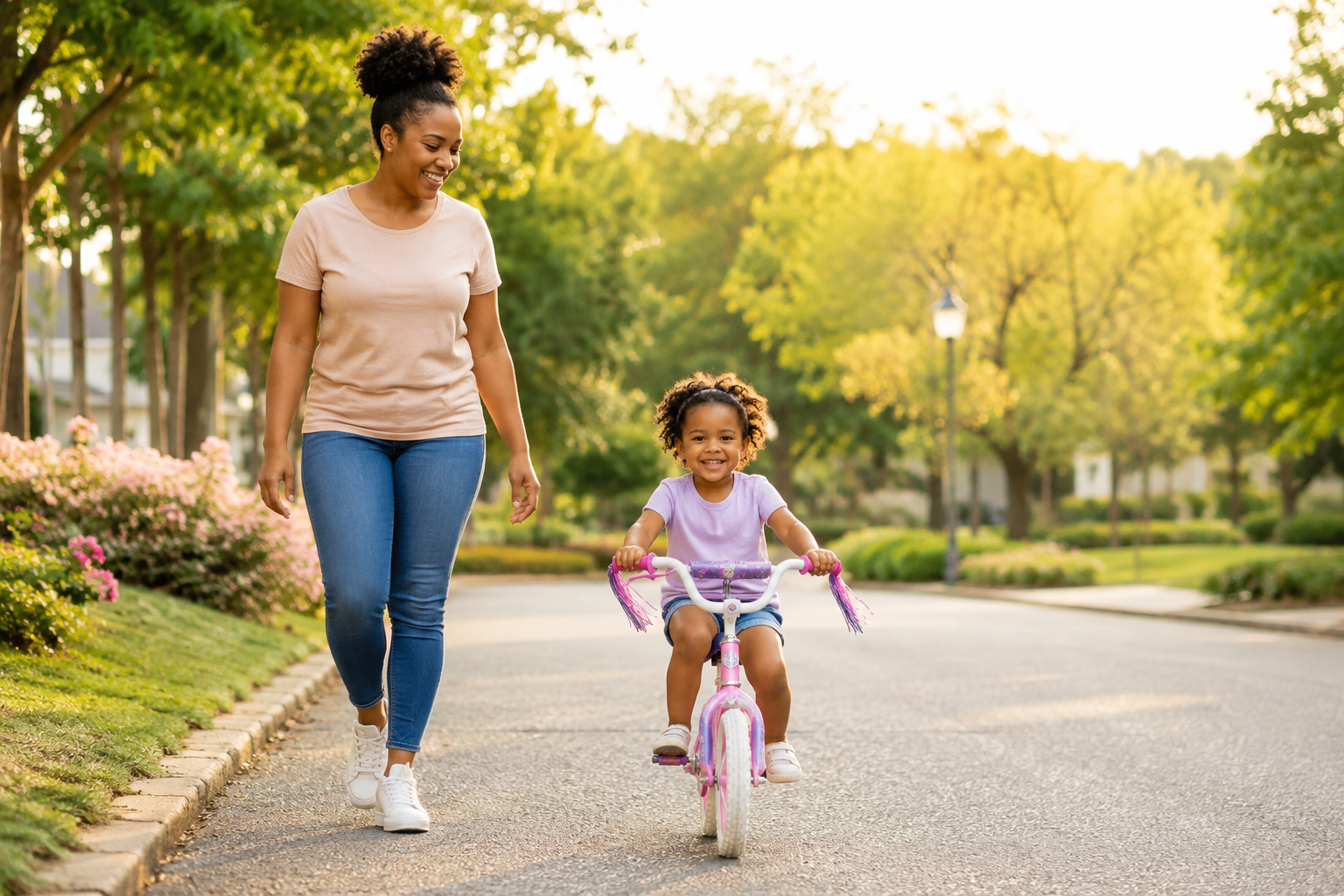
So for this Mother’s Day, I didn’t want the traditional fanfare. I took a long walk, ate ice cream, planted flowers in my garden, watched church service online, and walked again while my toddler rode her bike.
No cards. No presents. No words of affirmation from my adult children.
But so much peace.
It was the best Mother’s Day.