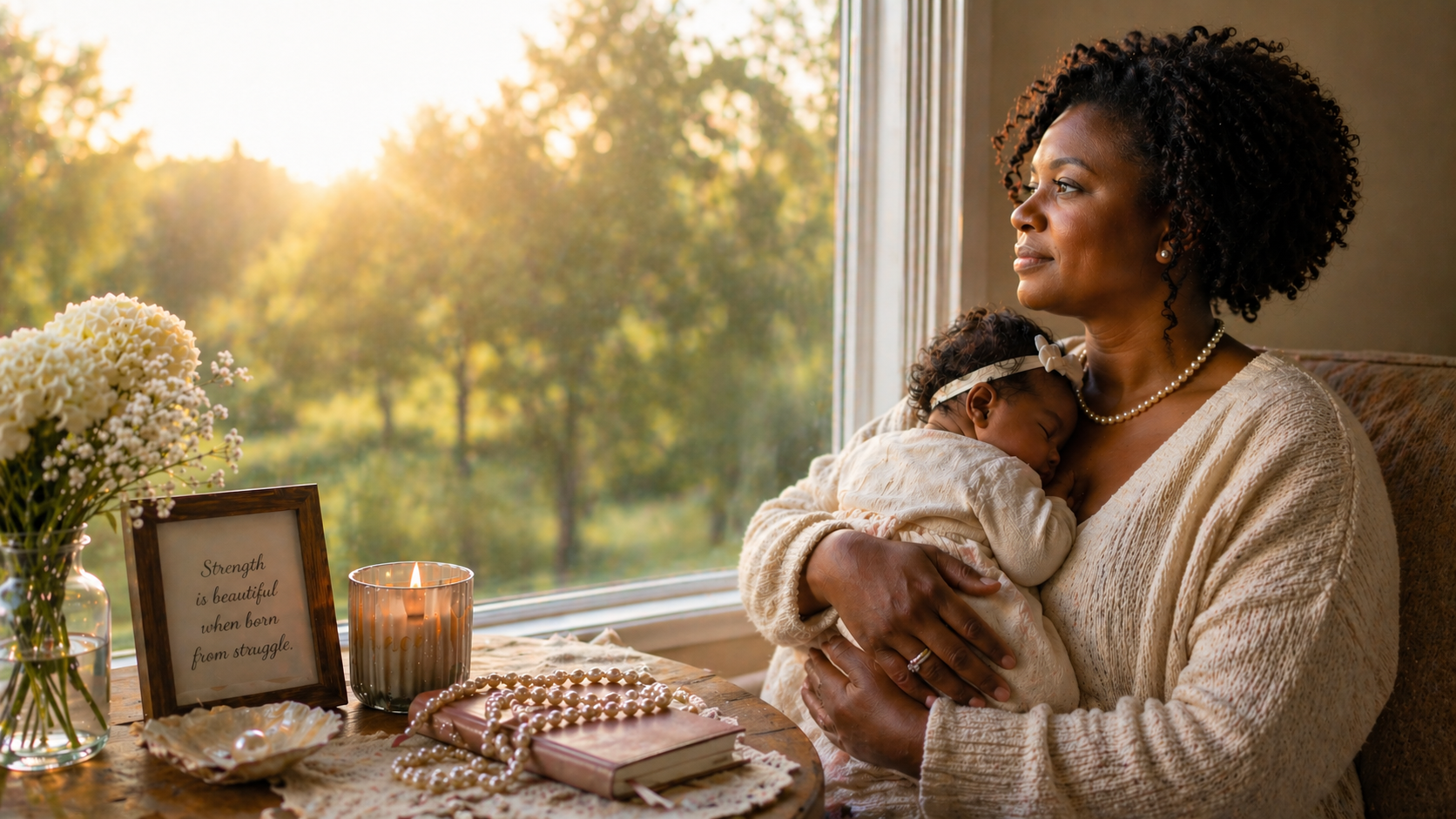
Since I was a little girl, I dreamed of being a mother of five, imagining a home filled with laughter, love, and the constant hum of family life. After 11 years of marriage, it felt as though my dream was finally beginning to unfold. In 2012, my life changed in an instant—I became a mother to three girls. It was a moment that felt both surreal and deeply fulfilling. I stepped into motherhood with hope, excitement, and a heart full of expectations about what this journey would look like.
If your motherhood journey looks nothing like what you imagined, you are not alone.
What I did not expect was how profoundly challenging motherhood would be.
When Adoption Made Me a Mom
No one could have fully prepared me for what it feels like to become a mom overnight—to three children who were five, seven, and ten—and then realize love doesn’t automatically make everything easy.
There were beautiful highs: laughter at the table, small wins that felt huge, moments when I thought, We’re going to be okay. But there were also lows—lonely, exhausting stretches—nights I cried after everyone went to bed, days I questioned my own capacity, and moments when I wondered if I was getting it wrong no matter how hard I tried.
There were seasons when my best efforts didn’t seem to change the outcome. I poured myself out—showing up, trying again, choosing patience, getting back up after hard days—and still felt like I was coming up short.
At one point, each child vowed they would move out at eighteen and reunite with their birth parents. Hearing that didn’t just sting; it unsettled me. It made me question what “being their mom” really meant, and whether my love would ever feel like enough.
It was during those moments that I resolved to be the best mother I could be, regardless of what they said or did in that season. And all the while, another part of my heart was quietly grieving—a longing to carry a child in my womb and give birth.
Infertility, Hope, and Loss
Then, in 2021, motherhood took another unexpected turn. After years of failed infertility treatments, I became pregnant during the COVID-19 pandemic. I still remember the mix of joy and fear when the ultrasound technician said there were two heartbeats.
I held my breath through the first trimester—the “danger zone”—waiting for the moment I could finally share the news with family and friends. I tried not to rejoice too soon, but it felt like God was answering years of prayers for a baby.
When we reached the end of the first trimester, my husband and I shifted into celebration mode. But the sweetness was complicated: the two adopted kids still at home resented the pregnancy, and even my loyal lap dog wouldn’t sit beside me.
As the second trimester came to a close, everything changed. I miscarried the twins, and my world felt like it was crashing down. In one brutal stretch of time, it felt like motherhood was slipping away from me in both directions—the babies were gone, and my adopted children were saying they’d leave the moment they were old enough. I was grieving both losses at once.
That kind of heartbreak is hard to describe. It wasn’t just disappointment—it was a deep, soul-level ache that made me question everything, including whether I was truly equipped for motherhood. I replayed decisions and wondered if I had done the right thing. In that season, I wondered if loss would always have the final word in my story.
Pregnant at 47—and a NICU Stay I Didn’t See Coming
In 2022, motherhood changed once again. At 47, I found myself pregnant once more—and this time, every appointment carried the same fear: that this baby might not survive.
The second trimester was especially heavy. This was the stage where I had lost the twins. Choosing faith over fear was a constant struggle—not because I expected life to be easy, but because I was fighting to believe God would still bless me with a child.
At 33 weeks, I gave birth to a baby girl who spent one week in the NICU at the birthing hospital before being transferred to a more advanced NICU for three additional weeks.
The NICU was its own world—beeping monitors, teams of doctors, wires everywhere, and watching my baby struggle to eat. My life revolved around the hospital where I slept, showered, and ate. I learned to hold and bathe her with wires attached. It was heartbreaking to watch her cry as tubes went into her nose and blood was drawn again and again.
Once more, I was facing motherhood in a way I never expected.
In my late forties, I was parenting a newborn, a traumatized teenager, and two estranged young adults, and they stretched me in ways I didn’t know were possible. This was not how I envisioned motherhood, and I began to resent the journey.
However, over time, through prayer and reflection, my perspective began to shift.
The Pearl I Didn’t Know I Was Growing
I started to see motherhood not just as a role measured by outcomes, but as a process—one that shapes and transforms you from the inside out.
I began to think of motherhood as the making of a pearl. A pearl forms through irritation—through layers built over time in response to something uncomfortable, even painful.
For me, those layers look like NICU nights, strained relationships, the loss of children, and failed infertility treatments. The pearl’s creation isn’t overnight, and it certainly isn’t easy. But in the end, it is beautiful and valuable.
And here’s what I’ve come to believe: the pearl isn’t the child—it’s the lessons we learn along the way.
Motherhood has taught me more about myself than I ever expected. It has revealed my strength to love children enough to let them go and explore life on their own, as well as my weakness in not prioritizing my own needs.
It has forced me to confront fears, insecurities, and limitations—and it has also shown me my capacity for love, patience, resilience, and growth. Each challenge, setback, and moment of doubt has added another layer of wisdom I now carry with me.
As mothers, we are constantly learning—not only about our children, but about who we are becoming. Those lessons are the true treasures we gain: pearls gathered over time, shaped by experience, perseverance, and grace.
I’ve realized those lessons don’t just add up—they tell a story of growth and transformation.
Like a strand of priceless pearls, they can be worn with beauty and grace: a reminder of what we’ve endured and what we’ve become.
Motherhood may not look the way I imagined, but I’m learning there is beauty in the forming—layer by layer.